La EcoVilla Community

They Got the First One Right… Now They’re Expanding
They learned what worked. The second location is already ~80% sold out—and it’s built for people looking for a better way to live.
The first La Ecovilla works—not as a concept, but in real life. Systems are used, not just planned. People live there, and the community holds up day to day.
That’s the difference. Most projects stall at the idea stage. This one didn’t.
They took what worked, refined it, and applied it to a second site—one that’s already largely spoken for.
That’s what makes this worth paying attention to.
What I like about this project is straightforward. They’re working toward an idea that actually matters right now: a community that can support its residents in a more resilient way.
Not fully off-grid, and not isolated from the world—but less dependent on fragile systems that most people take for granted.
Because the reality is shifting. Global supply chains break. Infrastructure fails. Food, water, and energy security are no longer abstract concerns—they’re becoming practical ones.
Most developments ignore that completely.
This one doesn’t.
To understand the expansion, you need to understand the original project first.
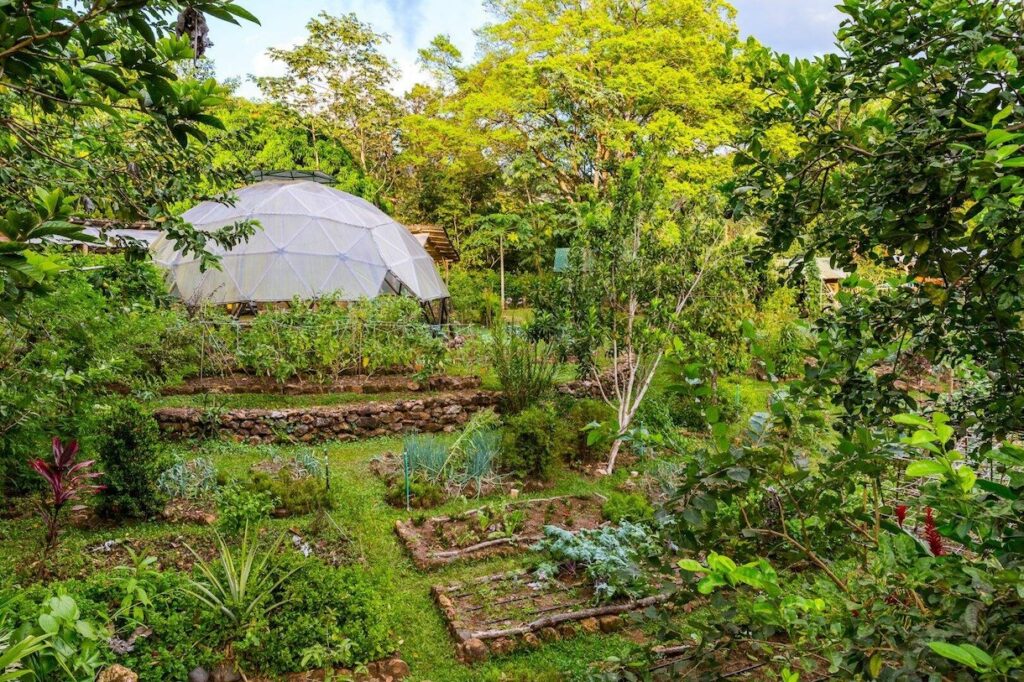
La Ecovilla is a functioning intentional community with real residents, shared infrastructure, and integrated permaculture systems. It isn’t perfect, but it’s real—and that matters more than a polished concept that never gets implemented.
That foundation changes how you evaluate the second phase. You’re not guessing whether the model works. You’re looking at how it’s being extended.
The new location is being developed on land that used to be a petting zoo, which is a stronger starting point than most people realize.
The land is already cleared, already used, and already accessible. Instead of cutting into untouched terrain, they’re repurposing something that had a previous life and adapting it into a new system.
That’s a more responsible approach to development—and it shows in how the project is being positioned.
The lots range from roughly 760m² to 3,800m², priced between $135K and $490K. On paper, that might seem high for the size if you’re comparing it to raw land.
But that comparison misses the point.
You’re not just buying land. You’re buying into a system that already exists—shared infrastructure, a defined community structure, and a model that has been tested in real conditions. That’s where the value sits.
See what’s actually available here right now
If you want a clear picture of what you can buy inside this community today—not just ranges and marketing—we can walk you through:
Current lots and homes (what’s still available)
Real pricing and recent deals
Which positions are strong—and which to skip
👉 Message us for current La Ecovilla opportunities (lots + homes)
This kind of project isn’t designed for everyone.
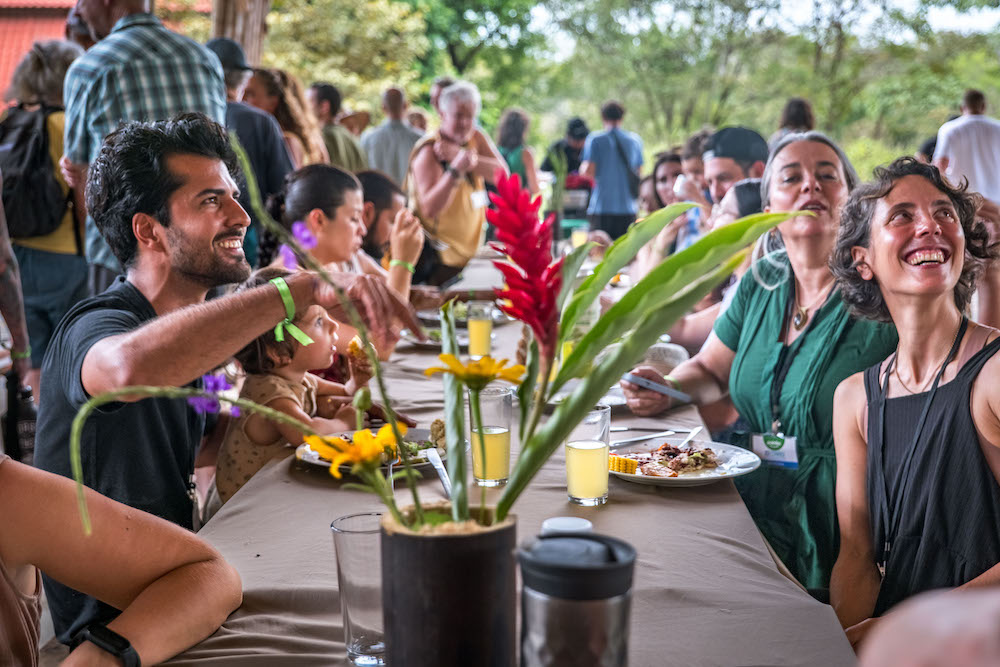
It’s not a flip opportunity, and it’s not built for maximizing density or extracting short-term returns. It’s built for people who want a different balance—smaller private spaces, shared environments that are actually used, and a more integrated way of living.
For families in particular, this is one of the more livable versions of that model. It’s not extreme, and it doesn’t feel forced. It’s structured in a way that people can realistically adapt to.
What stands out most is the restraint in the development approach.
They’re not overbuilding, they’re not pushing density, and they’re not trying to maximize every square meter. They’re working within a system that already functions and expanding it in a controlled way.
That’s rare, especially in Costa Rica where most projects lean heavily toward volume and quick return.
If there’s one area I’d push further, it’s food production and overall system self-sufficiency.
They already have a strong base in place—common gardens, solar power, and on-site water systems that are actively being used by the community.
That’s important. Most developments don’t even get that far.
But it’s not yet built to fully supply the entire community.
Right now, it reduces dependence—it doesn’t eliminate it.
That said, it’s still lightyears ahead of anything else in this area, and the framework is there to expand. Scaling food production, increasing energy redundancy, and tightening those systems would be a natural next step if the goal is full resilience.
The philosophy is there, and the original project shows what’s possible right now. But in the expansion, it’s not a central driver of the model. That doesn’t break the project—it just leaves room for deeper resilience that could strengthen it long term.
SMART Analysis
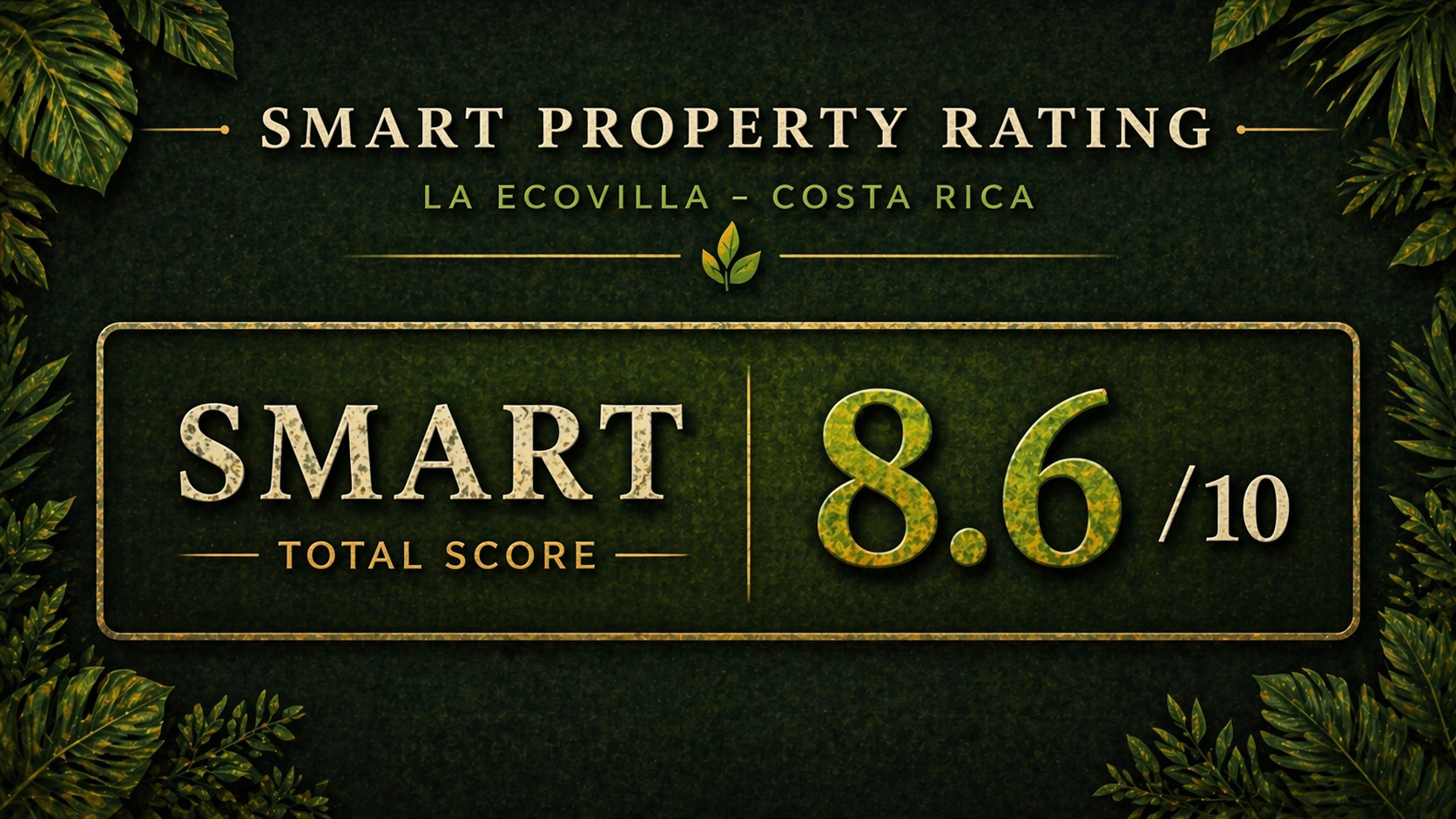
Overall Score: 8.6 / 10
This is one of the stronger community-based developments currently available in Costa Rica.
The reason it scores this high is simple: execution has already been proven. You’re not stepping into a concept—you’re stepping into a system that works, now being expanded. The only real question is how well that system scales.
Sustainable — 8.5/10
There’s a solid foundation here, with integrated systems and a reduced footprint compared to typical developments. The project moves in the right direction, but it isn’t fully optimized yet.
There’s still room to expand food production, improve redundancy in water and energy systems, and move closer to a closed-loop model. It’s ahead of most projects, but not at its ceiling.
Mindful — 8.8/10
This is where the project benefits most from the original location. They’re not guessing—they’re iterating based on what already works.
Layout, community structure, and real-world feedback have all been tested, which removes a significant amount of risk. The only reason this isn’t higher is because scaling always introduces variables that don’t show up in smaller systems.
Aligned — 9/10
The positioning is clear and consistent.
This is built for people who want a smaller footprint, shared infrastructure, and a participation-based community. There’s no confusion about what the project is trying to achieve, which makes it a strong fit for the right buyer—and a poor fit for the wrong one.
Responsible — 8.5/10
Reusing previously developed land instead of clearing new areas is a strong move. Combined with controlled density and shared systems, it reduces environmental impact while improving efficiency.
This is a more balanced approach than the typical build-maximize-sell model.
Tested — 8.5/10
The core model is already proven. The original La Ecovilla is operating with residents, functioning systems, and a working community structure.
That removes one of the biggest risks in this category.
What’s being tested now is not whether the concept works—but whether it scales cleanly. Culture, infrastructure, and standards all need to hold as the project grows.
That’s a real consideration, but it sits on top of a validated base, which puts this in a much stronger position than most developments.
SWOT — The Real Picture
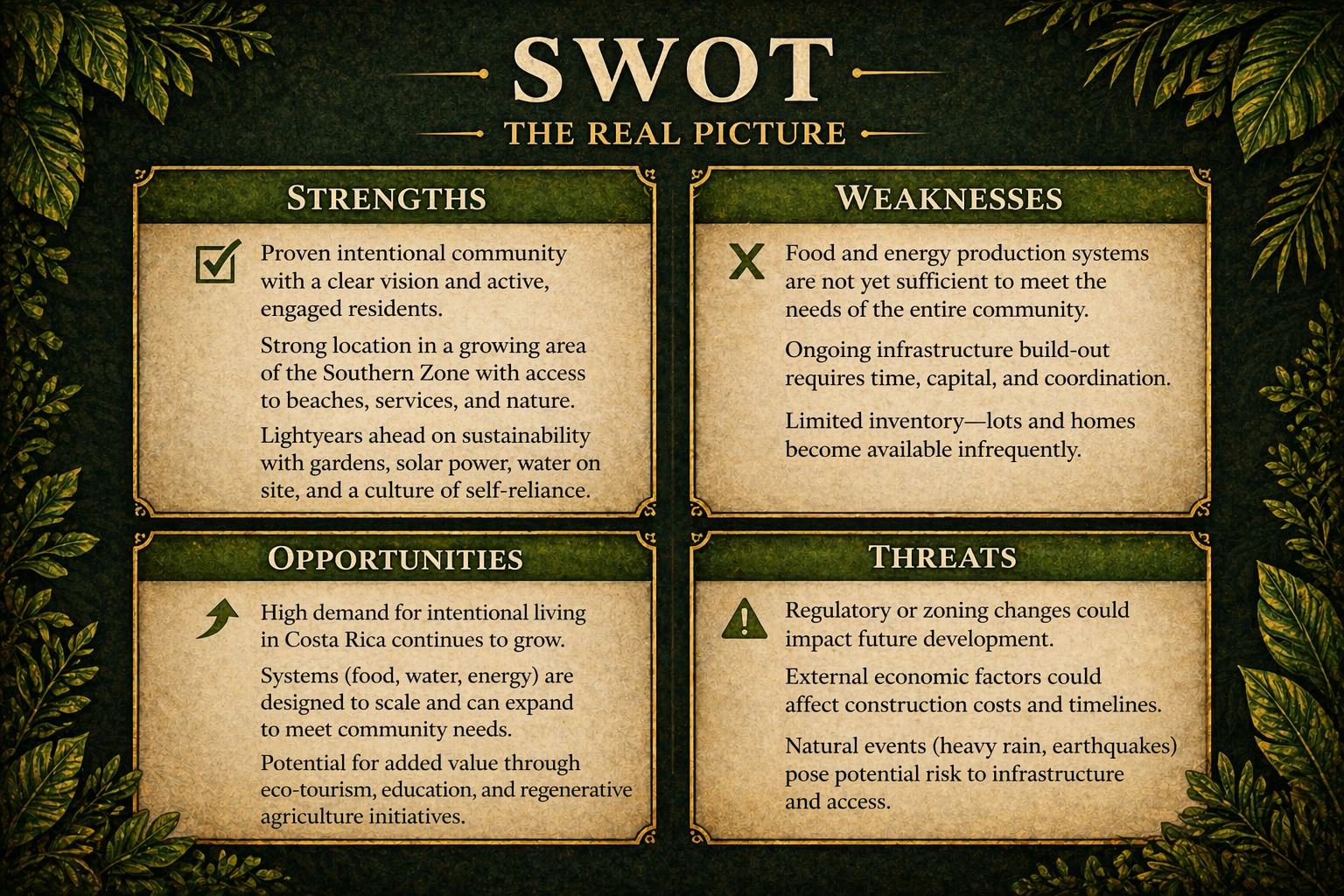
Strengths
Proven model already operating at the original site (reduced execution risk)
Clear positioning: small private footprint + shared systems that are actually used
Responsible land use (repurposed site, controlled density, shared infrastructure)
Immediate community and culture—no need to build it from scratch
Weaknesses
Not fully self-sufficient yet (food/energy/water systems reduce dependence but don’t replace it)
Limited autonomy by design (guidelines, shared decisions, participation required)
Price per m² looks high if evaluated as raw land
Opportunities
Expansion phase entry into a proven ecosystem
Clear path to deepen resilience (scale food production, increase energy redundancy)
Strong fit for families and long-term residents seeking stability over speculation
Threats
Scaling risk (culture, standards, and infrastructure must hold as the community grows)
Buyer mismatch (those expecting full independence or pure ROI will struggle)
External reliance still exists if systems aren’t expanded alongside population
Final Thought
Most projects in this space sell an idea.
This one is already operating—and now it’s being expanded.
That’s a different level of risk, and a different level of opportunity.
You’re not betting on whether it works. You’re evaluating how well it scales—and whether that system fits how you actually want to live.
If it does, this is one of the cleaner entries into a functioning intentional community in Costa Rica.
If it doesn’t, forcing it will create friction you can’t design your way out of.
Either way, the decision isn’t about the lot.
It’s about the system you’re stepping into.
If you’re looking at eco communities or intentional living projects in Costa Rica, the details matter.
Some are ideas. Some are partially built. A few are actually functioning.
Knowing the difference is what separates a good decision from an expensive mistake.
Want access to lots or homes in this community?
We can give you:
Current availability (lots + homes)
Real pricing (not just listing ranges)
What’s actually worth buying vs what to avoid
👉 Message us directly to get current opportunities in La Ecovilla

Want a full breakdown before you move forward?
If you’re seriously considering buying in Costa Rica—especially in a community like this—you don’t want to guess.
We break properties down so you understand:
What’s solid
What’s missing
What it actually turns into after you own it